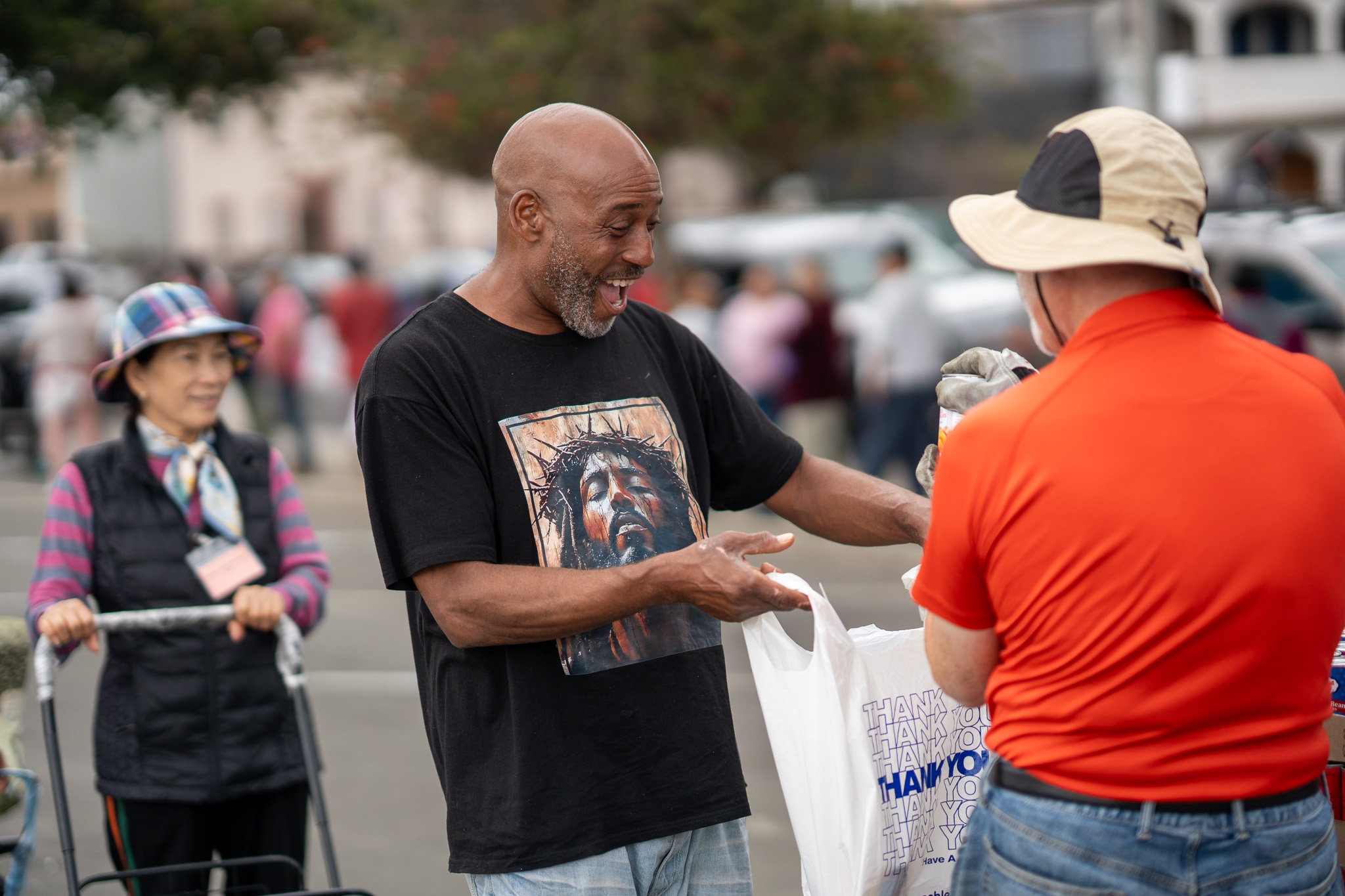
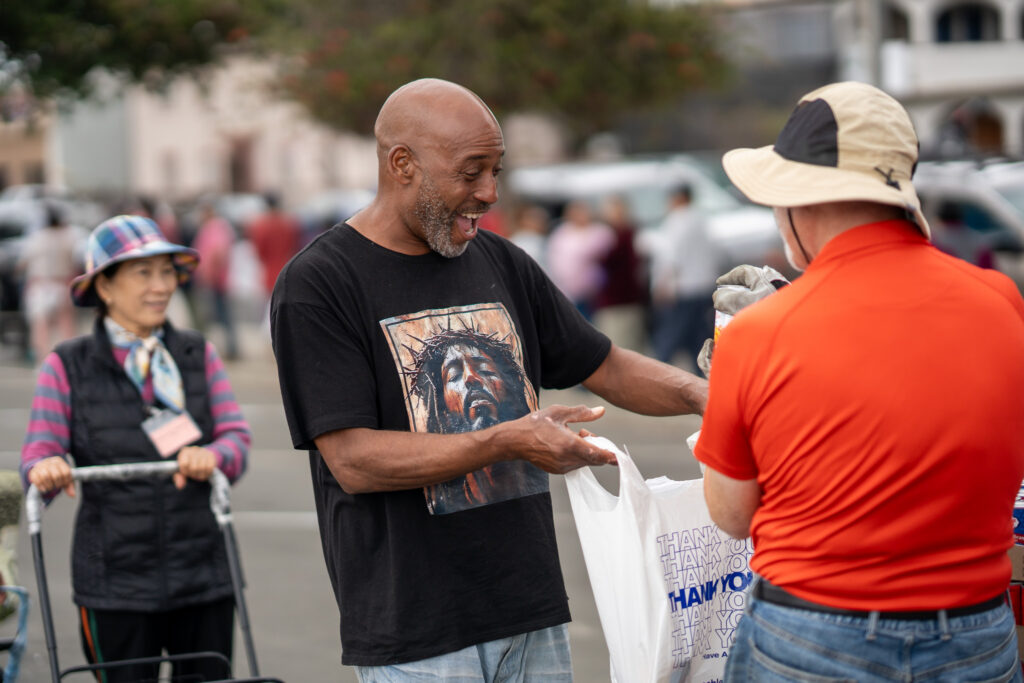
Being able to choose your own groceries is something many of us take for granted, but it isn’t always the norm at food distributions.
Thanks to supporters like you, the Food Bank is making it possible for more of our neighbors to make their own decisions about what foods work best for their families.
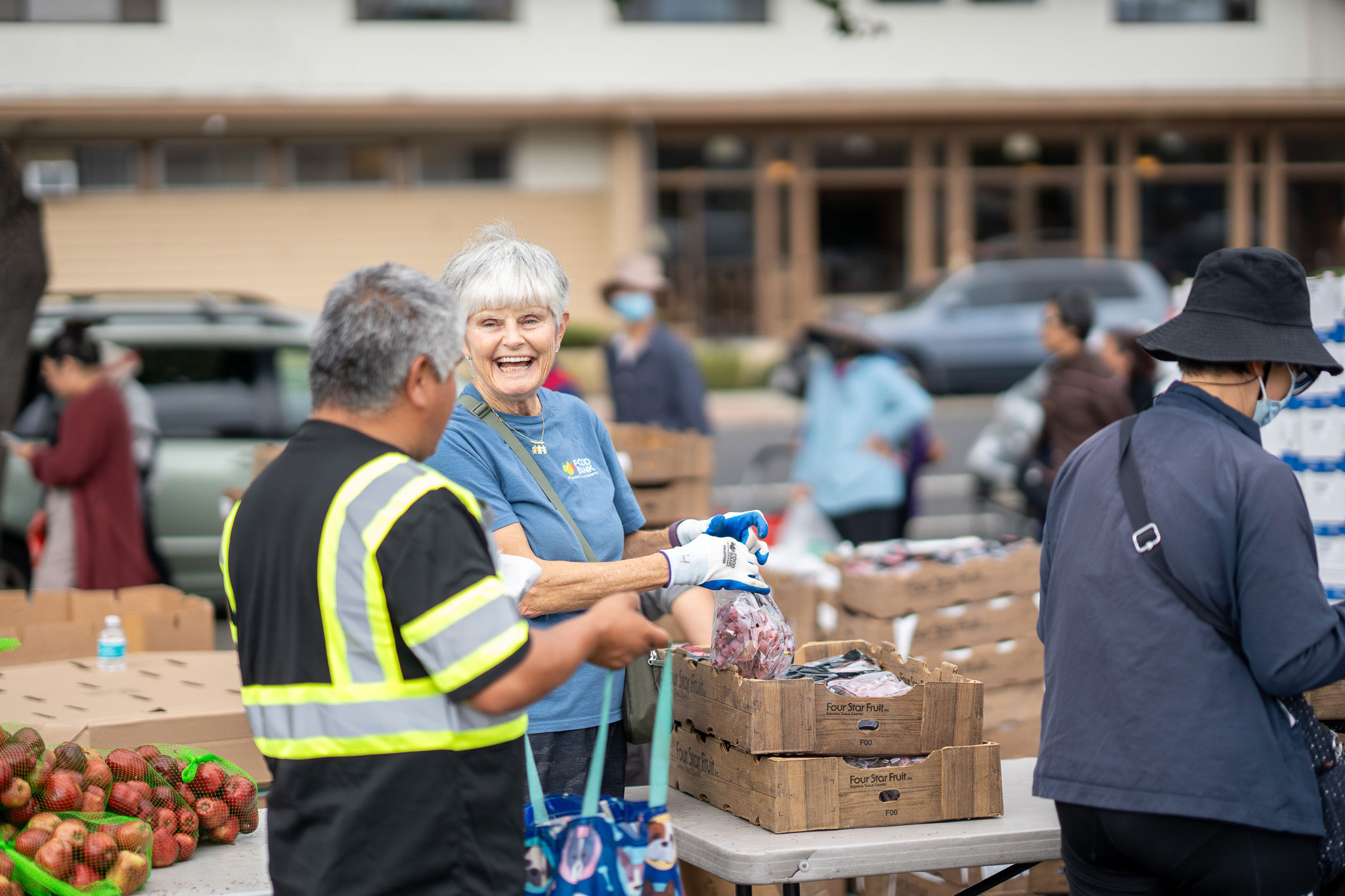
How a choice-based food distribution works
In the past, our neighbors might have left one of our food distributions with a pre-packed bag or box of food.
Today, they choose from an assortment of items, selecting those that meet their household’s needs.
Neighbors with food allergies, medical conditions such as diabetes, or who follow cultural dietary practices, can take the foods their families will eat and leave behind items they won’t use.
Food Bank programs, including our Community Produce, Senior Food, and Mobile Pantry distributions, operate using this choice-based approach.
Local, environmental advantages
Choice-based distributions mean neighbors go home with food they want to cook and eat, making it less likely that food will be thrown out or wasted.
It also allows us to see what foods our neighbors truly want and need in different areas of our community. By observing these trends, and listening to our neighbors’ feedback, we can make sure we’re turning your support into food that directly supports our community’s wellbeing.
Comfort and care
When neighbors can pick the food they want, coming to the Food Bank becomes a more dignified experience. A choice model recognizes our neighbors as unique individuals who understand their needs better than anyone else.
That’s why we plan to bring choice-based distributions to as many of our neighbors as possible.
With your support, we’re working to empower more of our agency partners – the soup kitchens, food pantries, and other nonprofits who help extend our reach – to move to choice-based distributions too. Together, we can make sure every household has access to food that supports their health, culture, and dignity.