Our History: 50 Years of nourishing our community
Past
In 1975, at a time when the term “food bank” was just coming into existence, 15 local food pantries and agencies incorporated into what is now known as the Food Bank of Contra Costa and Solano.
The early food coalition had two staff members working out of a cubicle in the Social Services office distributing food using a borrowed Safeway trailer and a chest freezer.
Present
Fast forward five decades and the Food Bank now provides more food in one day than we did that entire inaugural year.
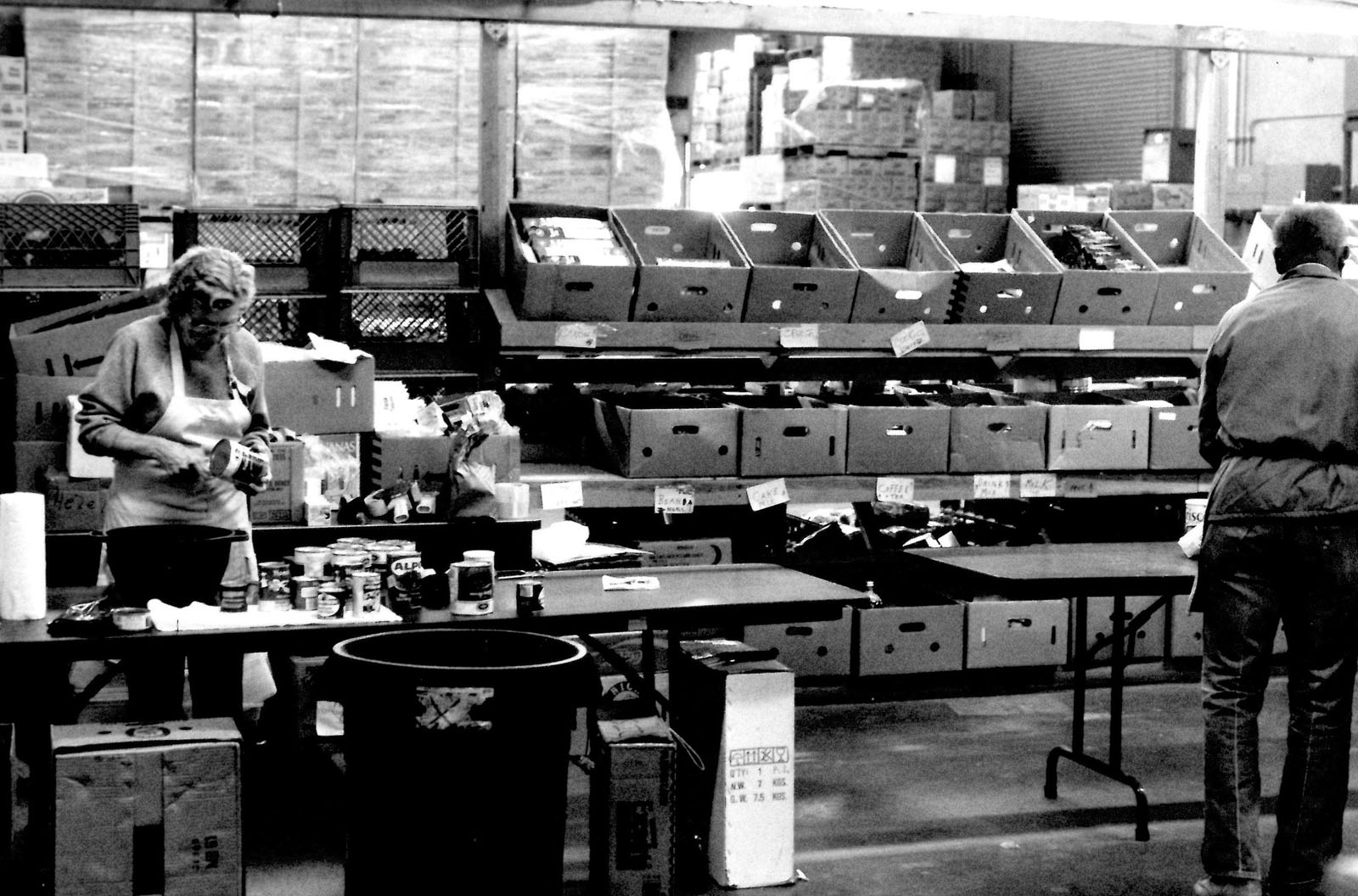
We operate out of two warehouses located in Concord and Fairfield, California totaling 144,000 square feet.
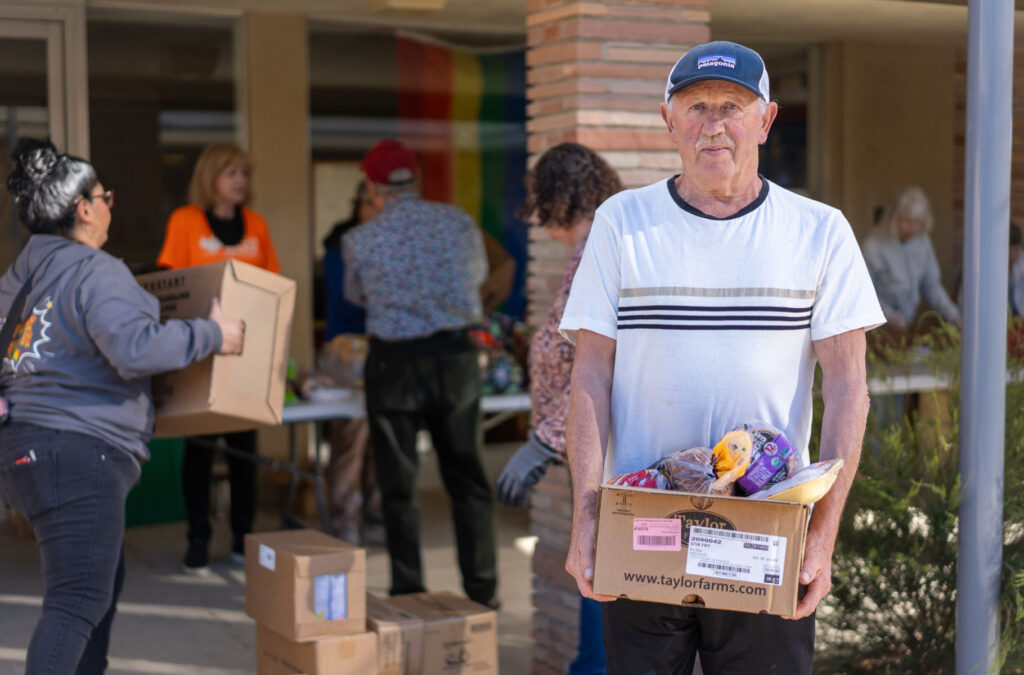
We’ve grown to become second responders during times of crisis caused by economic downturns, government shutdowns, earthquakes, fires, and COVID-19.
Future
As we evolve and adapt again, Strategic Plan 2030 is our roadmap to meet the real challenges facing our neighbors today, and create a stronger, more stable community for all.
Following three core strategies, we’ll bring local nonprofits, business, and community leaders to the table to build solutions that go beyond food, to tackle the root causes of hunger. We’ll also build on our work to reduce food waste and increase access to nutritious food, while reducing barriers for our neighbors in need.
Historical Highlights
In order to provide a coordinated service to a greater number of people, 15 local food pantries and agencies incorporate as the Community Food Coalition of Contra Costa County. Two employees worked out of a cubicle in the Social Services office in Martinez and delivered food using a borrowed trailer from Safeway and a chest freezer.
Leadership is passed to Larry Sly, who ended up serving as Executive Director for 43 years.
A bill is passed allowing for tax deductions on food donations. Based on this, a 5,000 square foot warehouse is leased in Concord.
The Community Food Coalition begins its first direct distribution program called Brown Bag (now called the Senior Food Program) to provide five or six food staples like bread and canned goods to 50 low-income seniors in Antioch.
Surplus commodities are released by the USDA providing a large increase in donated food.
The Food Coalition joins the Second Harvest national network of food banks (now called Feeding America).
The term “food bank” is becoming widely recognized, so the growing Coalition changes its name to Contra Costa Food Bank.
The Food for Children program is created to serve low-income children ages 4 and 5 when they are too old for WIC, but not yet receiving free school lunches.
The Contra Costa Food Bank incorporates with the Solano Food Bank and changes name to the Food Bank of Contra Costa and Solano.
The Food Bank moves to a 30,000 square foot warehouse and office space in Concord and continues to lease a 10,000 square foot warehouse in Fairfield.
Outreach begins to let people know about benefits available to them with the Food Stamp Program (now called CalFresh or SNAP).
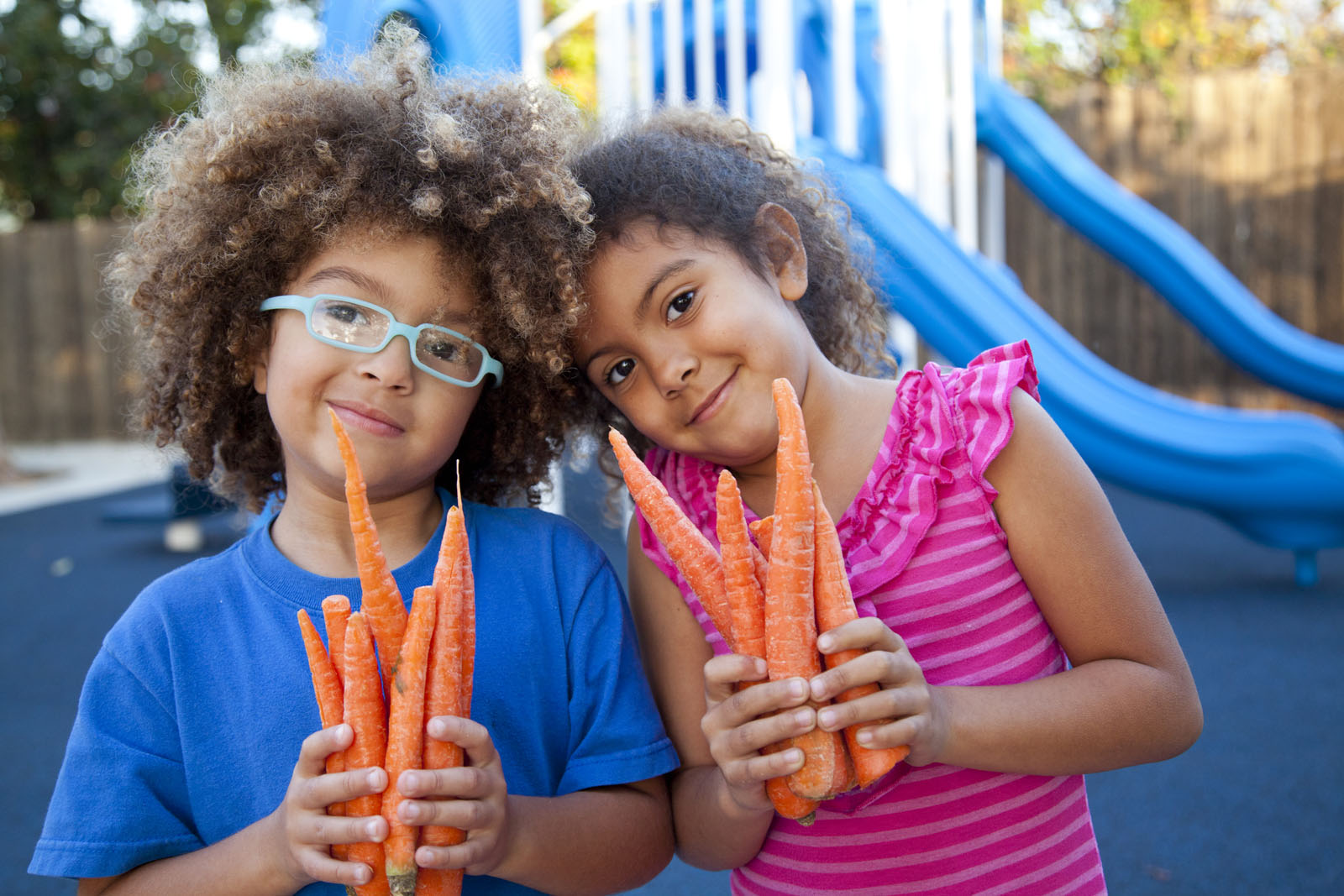
The Farm 2 Kids program begins; the Food Bank partners with after-school programs in low-income areas to provide fresh produce and nutrition education to elementary and middle-school children.
The Food Bank leases a larger 30,000 square foot warehouse in Fairfield.
The Community Produce Program was started with a desire to distribute more fresh fruit and vegetables to combat health issues such as diabetes and obesity. Customized refrigerated trucks travel to high-need areas and act as mobile farmers’ markets.
During our 40th year of operation, the Food Bank passes out 20 million pounds of food, over half of which was fresh fruits and vegetables.
The College Pantry Program was started to address food insecurity amongst college students.
Larry Sly retires and passes the torch to new CEO and President, Joel Sjostrom.
COVID-19 hits and the Food Bank does not stop service; drive-thru distributions help to keep recipients and volunteers safe. The National Guard helps assemble food boxes and the Food Bank distributes a record-breaking 40 million pounds of food in a single year.
Kitchen-free boxes are created to help displaced fire survivors and others needing meals not requiring refrigeration or heating. The Food Bank of Contra Costa and Solano is Feeding America's West Coast hub for disaster response.
Caitlin Sly is named as new President and CEO.
To mark 50 years of fighting hunger, the Food Bank's new Strategic Plan 2030 was developed in partnership with our neighbors in need, our hunger-fighting agency partners, our staff, and our Board of Directors. It’s built for our community, by our community,to ensure your support continues to make a real impact in the fight against hunger.
The first refrigerated food lockers with our nonprofit agency partners are installed thanks to a Contra Costa County Measure X Innovation Grant the Food Bank received. Unlike traditional food pantries, these lockers may be accessed at any time of day, any day of the week.